


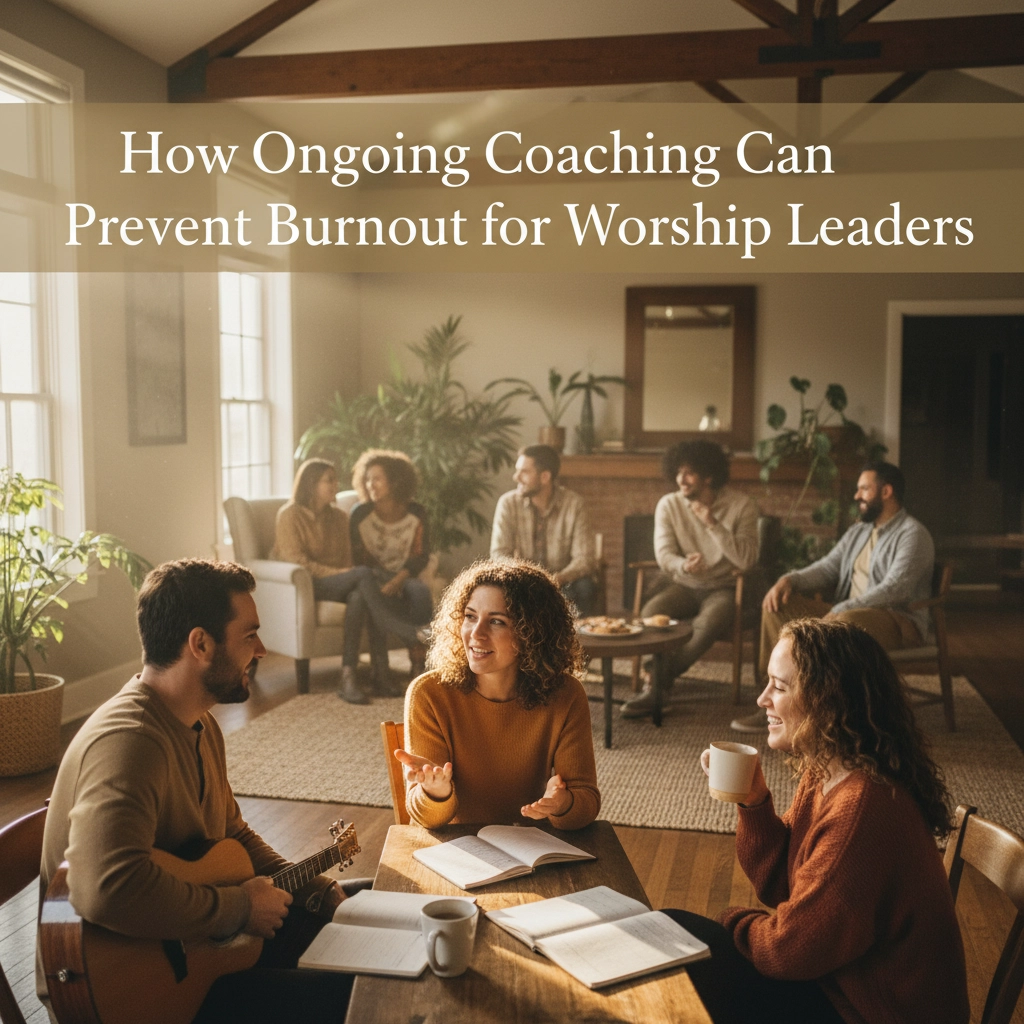
How Ongoing Coaching Can Prevent Burnout for Worship Leaders
As we continue our series on the transformative power of coaching for worship leaders, we need to address the elephant in the room: burnout is stealing some of our most passionate worship leaders. Maybe you've felt it creeping in, that bone-deep exhaustion that Sunday morning coffee can't touch, the overwhelming weight of leading others when your own tank feels empty, or that gnawing sense that you're running on fumes while everyone expects you to radiate spiritual vitality.
You're not alone in this struggle, and more importantly, you don't have to stay trapped in this cycle.
The Hidden Crisis Among Worship Leaders
The statistics are sobering, but they reflect what many of us already know from experience. Worship leaders face unique pressures that create a perfect storm for burnout: the spiritual weight of leading others into God's presence, the technical demands of modern worship, the relational complexities of managing teams, and the emotional labor of being "on" every Sunday while navigating your own spiritual valleys.
Research shows that professional pastoral supervision, similar to ongoing coaching, significantly reduces burnout, depression, and anxiety while increasing work effectiveness. When ministry leaders receive consistent, structured support, they're better equipped to serve others without sacrificing their own well-being.
But here's what's heartbreaking: too many worship leaders suffer in silence, believing that asking for help somehow undermines their calling or spiritual maturity. Nothing could be further from the truth.

How Coaching Creates a Lifeline
Early Warning System
One of coaching's greatest gifts is helping you recognize burnout symptoms before they become debilitating. A skilled coach helps you identify patterns you might miss when you're in survival mode, like that Sunday afternoon crash that's gotten progressively worse, or the way you've started dreading team rehearsals that once energized you.
Burnout doesn't happen overnight; it's a gradual erosion that coaching can catch and reverse. When you have someone asking you the right questions regularly, you develop awareness of your emotional and spiritual temperature before you hit the danger zone.
Healthy Boundary Architecture
Learning to say no is one of the fastest ways to prevent burnout, but it's also one of the hardest skills for ministry-minded people to develop. A coach doesn't just tell you to "set boundaries", they help you build a practical framework for making decisions that protect your capacity while still serving faithfully.
This might look like establishing specific hours when you're unavailable for non-emergency ministry calls, delegating responsibilities that others can handle, or creating systems that prevent every crisis from landing on your desk. As Scripture reminds us, "For my yoke is easy and my burden is light" (Matthew 11:30). If your ministry load feels crushing, something needs to shift.
Spiritual Root System
Here's a truth that might surprise you: many worship leaders struggle to maintain their own spiritual lives while pouring out spiritually every week. The irony is real, you're leading others into worship while your own heart grows dry.
Coaching addresses this by helping you develop sustainable spiritual practices that feed your soul, not just your ministry preparation. This goes beyond just reading your Bible for sermon prep or worship planning. It's about cultivating genuine intimacy with God that sustains you when ministry gets hard.

The SPARK Framework for Renewal
Recent research has highlighted the SPARK practice as a holistic approach to overcoming ministry burnout: Soma (body care), Preparation, Awe, Retreat, and Kinship. This framework recognizes that preventing burnout requires attention to every aspect of our humanity, physical, emotional, spiritual, and relational.
Soma (Body Care): Your physical health directly impacts your spiritual and emotional resilience. Coaching helps you prioritize sleep, nutrition, exercise, and rest without guilt.
Preparation: This goes beyond Sunday prep to include preparing your heart, mind, and schedule for sustainable ministry rhythms.
Awe: Rediscovering wonder in your relationship with God and in the privilege of leading worship.
Retreat: Regular times of stepping back to gain perspective and receive from God rather than constantly giving out.
Kinship: Building genuine community with others who understand your unique challenges and can offer support, prayer, and encouragement.
Breaking the Isolation Cycle
One of burnout's cruelest symptoms is the isolation it creates. You start pulling back from relationships, avoiding vulnerability, and handling everything alone. But isolation only accelerates the downward spiral.
Coaching provides built-in accountability and connection. Your coach becomes someone who knows your struggles, celebrates your victories, and helps you process challenges without judgment. This relationship often becomes the catalyst for rebuilding other supportive relationships that ministry demands had crowded out.
Beyond your coaching relationship, a good coach will encourage you to cultivate a network of peers, mentors, and accountability partners who understand ministry life. As Ecclesiastes 4:12 reminds us, "Though one may be overpowered, two can defend themselves. A cord of three strands is not quickly broken."

Practical Tools for Daily Resilience
Effective coaching provides immediate, actionable strategies you can implement right away:
Energy Management: Learning to identify what gives you energy versus what drains you, then intentionally scheduling accordingly.
Emotional Intelligence: Developing skills to process difficult emotions healthily rather than stuffing them down until they explode.
Conflict Resolution: Building confidence to address team dynamics and church politics constructively rather than avoiding issues until they fester.
Vision Clarity: Regularly revisiting God's calling on your life and ministry to stay connected to your "why" when the "how" gets overwhelming.
The Multiplication Effect
Here's something beautiful about addressing burnout through coaching: the health you develop multiplies throughout your ministry. When you're operating from a place of spiritual and emotional fullness rather than depletion, everything changes.
Your team feels it. Your family notices. Your congregation receives richer, more authentic worship leadership because you're leading from overflow rather than deficit. The quality of your ministry actually improves when you prioritize your own well-being, it's not selfish, it's stewardship.
Your Next Step Toward Renewal
If you've recognized yourself in this article, please hear this: seeking help isn't weakness: it's wisdom. Some of the most effective ministry leaders in history had coaches, mentors, and accountability systems that kept them healthy and focused.
At Next Level Worship, we've seen hundreds of worship leaders find renewed passion and sustainable rhythms through our coaching programs. Our January coaching phase is specifically designed for leaders who are ready to move from surviving to thriving in their calling.

This isn't just about preventing burnout: it's about discovering the fullness of what God wants to do through your ministry when you're operating from health rather than depletion. Our coaching program combines biblical foundation with practical tools, creating space for both spiritual renewal and skill development.
Don't wait until burnout forces a crisis. The church needs healthy, sustainable worship leaders, and that starts with taking care of the leader God has called you to be.
Your ministry: and your soul: are worth the investment. Let's take this next step together.
Ready to break free from the burnout cycle? Our January coaching phase starts soon, with limited spots available for worship leaders serious about sustainable ministry. Visit nextlevelworship.com/coaching to learn more and secure your spot. Your future self will thank you.
Editor’s Notes: This article was published with the assistance of AI.

Ministry Spotlight: Coaching with Dwayne Moore
[fusion_builder_container type=”flex” hundred_percent=”no” hundred_percent_h

Teaching Through play in childrens ministry
Welcome to a world of endless curiosity, boundless energy, and hearts eager to embrace the divine. I
Staff Spotlight: Lilian Rague
Lilian serves Ridgeways Baptist Church in Nairobi, Kenya as the worship leader for the ladies minist
Leave a Reply
You must be logged in to post a comment.